
History of Chinese New Year
Chinese New Year, 春节 Chūnjié or Spring Festival, is the most important traditional holiday in China and many East Asian communities, with a history spanning over 4,000 years. It is not merely a celebration at the start of the new year, but a profound cultural and spiritual transition, linked to the cycles of nature, family bonds, respect for ancestors, and collective hope for renewal.
The earliest traces of celebrating the new year’s beginning tie back to the Chinese lunisolar calendar, in which the year is based on lunar phases and solar movement. Even in the era of early dynasties, the year transition was connected to agricultural cycles, sacrifices to heaven and earth, and rituals seeking protection and fertility.
During the Han dynasty 汉 Hàn (206 BC – 220 AD), New Year gradually took shape as an official state and family holiday, with clearly defined rituals for honoring ancestors, household deities, and natural forces. In the Tang period 唐 Táng (618–907), the celebration expanded to public spaces: fairs, street festivities, the first organized processions, and light festivals developed, transforming New Year into an event that strongly structures social life.
Over time, elements we now consider “classic” became established: family banquets, giving gifts in red envelopes 红包 hóngbāo, lion and dragon dances, watching fireworks together, and lighting lanterns to invoke luck for the coming year.
The Myth of 年 Nián and the Symbolism of Red
One of the most famous legends explains the origin of many customs through the story of the monster 年 Nián, which came to villages every year and terrified the inhabitants. According to tradition, people discovered that Nián feared loud noises, bright light, and the color red, so they began lighting firecrackers, hanging red ribbons, and lighting lamps to drive it away.
From this story arises enduring symbolism: the red color becomes a sign of protection, vitality, and prosperity, while fireworks and drums serve both apotropaic and celebratory functions. Thus, the myth is transmitted through practice – every time a sparkler is lit or a red sign is hung, the ancient pattern of defense against chaos and invocation of order, happiness, and abundance is renewed.
Fundamental Customs and Meaning of the Days
The celebration of 春节 Chūnjié spans multiple days, often up to fifteen, from the last days of the old year to the Lantern Festival. On the eve of New Year itself, a “great cleaning” of the home is carried out to remove old, stagnant energy and make space for new fortune; at the same time, efforts are made to avoid quarrels and negative words in the first days of the year, as it is believed they set the tone for the entire cycle.
Key elements include:
- Family gatherings and shared dinner, often the most important meal of the year, symbolizing unity and mutual support.
- Giving 红包 hóngbāo, especially to children and younger people, as a material and symbolic transfer of luck, protection, and good wishes.
- Lion and dragon dances, which bring strength, courage, and collective enthusiasm into public spaces, often in front of shops and institutions, to “awaken” luck for the entire community.
From traditional rural celebrations to global parades in big cities, the common thread is the idea of rebirth, transition from old to new, and alignment of the human community with the rhythm of heaven and earth.
2026
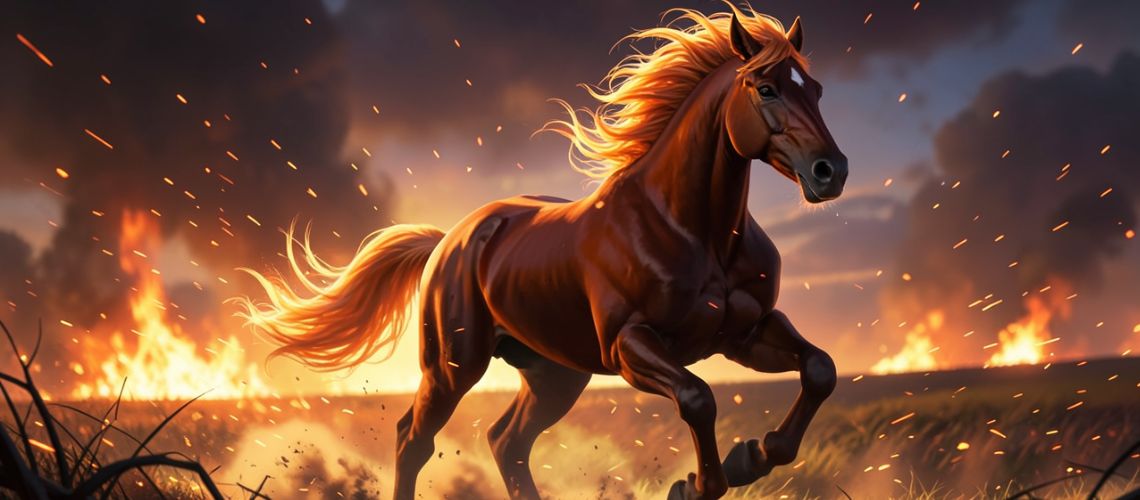
Year of the Yang Fire Horse (丙午 – Bing Wu) /
Hexagram 28 大過 “ Preponderance of the Great” (Dà Guò)

In classical Chinese metaphysics (Ba Zi / Feng Shui), the new energetic year officially begins worldwide at Li Chun – February 4, 2026, at 4:02 AM. In Europe, it starts on February 3, 2026, at 9:05 PM, and ends on February 4, 2027, at 2:55 AM. The Lunar New Year is February 17, 2026 – the cultural start of celebrations, but for Feng Shui analyses and “annual stars,” Li Chun is typically used.
Chinese astrology (Ba Zi) combines twelve animal signs with five elements (Wood, Fire, Earth, Metal, Water), so 2026 belongs to the Horse sign in the Fire element – Yang Fire Horse (丙午 – Bing Wu).
The Horse in Chinese symbolism represents movement, freedom, enthusiasm, and the drive to break boundaries, while Fire further amplifies passion, visibility, dynamism, and the desire for expression.
On a collective level, the Year of the Fire Horse is often interpreted as a time of acceleration, sudden turns, and strong initiatives: emphasis on action, courage, and risk-readiness, but also the need to wisely channel fiery energy to avoid slipping into impulsiveness and burnout. In personal life, this period can be experienced as a call to the “inner gallop”: reassessing one’s limiting beliefs, entering projects requiring heart and clear intention, and learning to maintain balance between speed and stability.
The Year of the Fire Horse emphasizes the outer world: relationships, social roles, professional challenges, and public action. In this sense, the celebration of Chinese New Year 2026 under the Fire Horse sign can be seen as a collective ritual of “starting the engine” – a moment celebrating not just the beginning of a new calendar cycle, but also the activation of energy for bold forward movement.
It brings speed, decisiveness, sudden turns, and a strong urge for “now or never.” This is a year when things can start incredibly fast – but that same fire, if not directed, easily turns into impulsiveness, conflict, exhaustion, and accident risk.
Hexagram 28 大過 ” Preponderance of the Great” (Dà Guò) signals a moment when ambitions, resources, or obligations exceed the bearing capacity of the structure, creating instability that is not permanent but a transient crisis with rebirth potential.
In personal life, this means confronting excessive expectations, emotional or energetic burdens – opportunities for pause, energy redirection, and focus on the sustainable. In relationships, it highlights temporary imbalance resolved by withdrawal or new foundations, without regrets.
Energetic Theme 2026: Fiery Speed
The Fire Horse symbolizes movement, travel, decisive cuts, and strong personal will. The year often “demands”:
- courage and initiative
· faster decisions and action
· more visibility, marketing, performances, presentations
· dynamic job/role changes
· movement, reorganization, moves, and travels
But it also carries typical challenges:
- more hot emotions (sudden flare-up then sudden calm)
· higher accident risk (haste, speed, carelessness)
· excess and burnout (too many obligations, too little recovery)
· relationship conflicts (directness without tact)
In the broader social context, such a year encourages more open speech, reforms, social friction, and “fiery” extremes (heat waves, fires, incidents).
This should not be viewed as fatalism, but as a call to security intelligence: planning, caution, preparation, and fewer impulses.
Annual Flying Stars 2026: Chart by Sectors (Basis for Home and Office)
Annual stars change every year.
For 2026, the layout we use is:
· Southeast (SE): 9 – happy events, “fiery” growth, joy, momentum
· South (S): 5 – “5 Yellow” (disasters / delays / risks) + Tai Sui area
· Southwest (SW): 7 – thefts, losses, injuries, “sharp” energy
· East (E): 4 – learning, relationships, creativity, knowledge reputation
· Center: 8 – stable earth, property, consolidation, “base”
· West (W): 1 – opportunities, help, career flow, new chances
· Northeast (NE): 6 – authority, advancement, responsibility, leadership
· North (N): 2 – illness, fatigue, weaker immunity, need for recovery
· Northwest (NW): 3 – arguments, legal issues, “cutting tongue”, tension
Annual “Afflictions”:
· Tai Sui is in the south area (S2) (zone better not to “disturb” or emphasize this year)
· Sui Po is in the north 2 area (N2) (also a very sensitive area)
· San Sha (3 Killings) is marked on the chart as an important annual unfavorable energy – in practice treated as a zone where construction work and aggressive activations are avoided, covering the following areas: Northeast 1 (NE1), North 2 (N2), and Northwest 3 (NW3). Of all three, NW3 is the least threatened, but attention should still be paid to it.
Analysis of Residential and Business Properties 2026: Where is “Best,” Where “Most Sensitive”
Best Aspect Areas of Home/Office 2026
According to the annual stars, the most favorable sectors are:
· SE (9) – growth, success, joy, visibility
· W (1) – opportunities, new flows, help
· E (4) – learning, relationships, creativity
· NE (6) – authority, career, decisions
· Center (8) – stability and consolidation
Most Sensitive Sectors 2026
· S (5 + Tai Sui) – utmost caution, no work
· N (2) – health, exhaustion, need for protection
· NW (3) – conflicts, legal matters, stress through communication
· SW (7) – losses, injuries, thefts, tensions
Chinese Zodiac Signs 2026: Who Has an Easier, Who a More Challenging Year (General Framework)
Most favorable signs: Goat, Rabbit, Pig, Monkey, while those under greater stress or conflict with Tai Sui are:
Horse, Rat, Rabbit, Rooster.
Rat
· The year demands caution with impulses and conflict situations.
· Advice: plan, slow down, don’t “prove yourself at all costs.”
Ox
· Focus: stability, work, property – but without stubborn pushing.
· Advice: work smart, not harder.
Tiger
· Good for action and visibility, but control your temper.
· Advice: lead through calm, not pressure.
Rabbit
· Can be among the stronger ones, but sensitive to tensions – dual theme.
· Advice: choose your environment, don’t get drawn into others’ dramas.
Dragon
· Good for strategy, plan revision, business upgrades.
· Advice: less spectacle, more structure.
Snake Good “brain of the year”: intuition + tactics.
· Advice: conserve energy, work in phases.
Horse Own year: more changes, emotions, and sensitivity.
· Advice: avoid unnecessary risks, strengthen health routines, make decisions after “sleeping on it.”
Goat
· Most supported – opportunities, recognition, progress.
· Advice: ride the wave; this is the year to “show yourself.”
Monkey
· Among the best: resourcefulness + new chances.
· Advice: watch out for scattering focus; choose 1–2 priorities.
Rooster
· Under greater stress (partial or direct challenges).
· Advice: fewer conflicts, more diplomacy; conserve energy.
Dog
· Stable potential for collaborations and reliability.
· Advice: long-term, without rashness.
Pig
· Among the favorable: growth, support, easier flow.
· Advice: use the year for healthier habits and smart expansion.
What to Especially Watch Out For in the Year of the Fire Horse
- Don’t rush. Haste is the main generator of mistakes and injuries.
- Health and sleep are not luxuries – especially if the bedroom falls in N (2) or S (5).
- Don’t renovate in the South (Tai Sui + 5).
- Fewer conflicts, more tactics – NW (3) and SW (7) are “sharp.”
- Plan travel and safety – the year emphasizes extreme events and the need for caution.
Travel 2026: Which Directions Are Easier, Which Better to Avoid (Generally)
If we view travel through the annual stars (direction as energy), then the more favorable directions are those with good stars:
· Southeast (SE – 9): growth, luck, good outcomes
· West (W – 1): new opportunities, helpful people
· East (E – 4): learning, relationships, inspiration
· Northeast (NE – 6): business strength, authority, strategic travel
More Cautious Directions in 2026 (More Effort/Complications):
· South (S – 5 + Tai Sui): avoid “big risks,” don’t go without a plan
· North (N – 2): health, fatigue, exhaustion
· Northwest (NW – 3): conflicts, tension, legal issues
· Southwest (SW – 7): losses, thefts, stress
These are general annual directional energies; personal charts and specific travel dates can significantly alter the picture.
In Conclusion: How to “Ride” the Fire Horse
The Fire Horse 2026 rewards those who:
· act boldly, but not recklessly
· work with rhythm (energy waves, then rest)
· choose quality relationships, not arguments
· use good feng shui: sit/sleep in better sectors, calm problematic zones
In practice, the most important thing to remember: the goal is not to “defeat the year,” but to align with it – and use its power without being overwhelmed.

Practical Recommendations for 2026
The Fire Horse brings fast, dynamic energy that resonates with Hexagram 28: strong progress, but risk of overheating, especially in finances, health, and relationships. Tai Sui in the south and Sui Po in the north create unstable axes, where excessive action (renovations, investments) can trigger collapse – instead, focus on stable zones like southwest (Wealth) and southeast (Prosperity).
Career and Work: The year encourages ambition, but warns against overexpansion – diversification or debts can overload resources; correct by focusing on the core business and avoiding risky moves in southern sectors.
· Finances: High risk of oversized investments.
· Health: Fiery overload can cause exhaustion or inflammation; relieve with calming routines (e.g., northeast #4).
· Relationships: Intense passion, but unstable; changes come through relationship purification.
Hexagram 28 大過 ” Preponderance of the Great” (Dà Guò) describes a phase of extreme pressure where ambitions and obligations exceed stability limits, requiring strategic corrections and focus shift. In 2026, the Yang Fire Horse year, this energy becomes even more pronounced due to intense fiery Qi that promotes growth but warns of overload risks in finances, health, and work.
Focus on “corrections, not revolution”: clearly define priorities, offload the unnecessary, and act gradually. This is the moment when existing structures can no longer bear the load, signaling the need for resource assessment and flexible redirection. It is not a time for aggressive expansion, but smart unloading – changing goals without abandoning core projects, focus on the sustainable, and preparation for the future. In business, this means limiting diversification and concentrating on the core activity; personally, confronting excessive expectations through clear priorities. The crisis is transient and carries success potential if the “salvation around the corner” is recognized.
If facing excessive ambition that currently exceeds your resources, the answer is clear: conduct a deep balance of capabilities. Leadership competencies – technical, managerial, and personal – change with circumstances, so you may be targeting a role that doesn’t match your current strengths or requires new skills. Don’t abandon the vision, but adapt goals and invest in preparation – this is not defeat, but an opportunity for strengthening. Every situation has multiple aspects – the solution is often close if recognized.
For entrepreneurs and companies, the warning is against overexpansion: excessively high investments, credit dependency, or scattering across unnecessary areas neglecting the business core.
Globally, the message is optimistic – complete necessary adjustments without revolutionary moves.
This year brings fiery overload: Tai Sui in the south (South 2) with #5 Disaster Star brings unexpected changes, catastrophes, and instability – precisely Hexagram 28’s “Great Excess/Overload” without balance. North (Sui Po) and south are “delicate” – avoid any changes (moving furniture, renovations) before February 3, 2026, or after February 4, 2027, as they activate blockages.
Center (#1 Water): Development, growth, career – activate for studies, innovations, and networking, but without excessive pressure.
· Southeast (#9 Fire): Prosperity, ideas, technical innovations – ideal for creativity, but caution against heart stress.
· Southwest (#6 Earth): Project completion, partnerships for men – calms fire.
Life Cannot Always Be Programmed – Feng Shui Wisdom in Practice
Life and changes – whether personal or in the context of an apartment or house – sometimes simply cannot be programmed according to our will. It is true that life happens unexpectedly, with challenges and opportunities that do not follow a strict schedule, but feng shui offers a practical bridge between fate and action. While 2026 brings unstable sectors such as south and north where renovations or major changes are risky due to Tai Sui and Sui Po energy, this can be mitigated through intelligent planning.
It is important to select optimal dates – with the help of Date Selection, conflict-free days can be found for key steps: starting a business, signing contracts, buying a house, or moving. Even in the Yang Fire Horse year, security can be achieved by choosing dates that support Qi flow and avoiding those that activate blockages in your home. This is not about controlling life, but cooperating with cycles – relieve pressured zones through rest, and direct energy toward favorable dates for action.
Thus, 2026 becomes a year not only of caution, but also of wise moves that transform crisis into stable growth.
Questions for Personal Growth
Where in my life do I experience excess or overload, and what are the potential consequences?
How can I identify and resolve areas of imbalance in my personal or professional life?
What steps can I take to align my actions with a sustainable and balanced approach?

Post a Comment
You must be logged in to post a comment.